 2026-02-05
Traditional mixproof valve matrix are characterized by complex, maze-like piping, but integrated solutions are bringing unprecedented innovation to this field.
In high-value industries such as pharmaceuticals, biotechnology, semiconductors, and food and beverages, absolute isolation and precise switching between different fluid media are critical to production processes. Traditional anti-mixing solutions rely on complex valve arrays and pipe combinations, which not only occupy valuable space but also present a series of challenges, including numerous dead spaces, high risk of cross-contamination, and huge maintenance costs.
In highly automated modern process industries, traditional mixproof valve matrix designs are becoming a bottleneck limiting efficiency and safety.
This "pipe maze," composed of multiple two-way valves, three-way valves, pipes, and fittings, has numerous inherent defects. It leads to excessive dead volume, making thorough cleaning and sterilization difficult, becoming a breeding ground for microorganisms and affecting product purity. This is particularly critical in the pharmaceutical and biotechnology industries, where this defect directly impacts product quality and compliance.
Secondly, countless mechanical connection points mean countless potential leakage points, increasing safety risks and driving up maintenance costs and validation burdens.
Furthermore, the large physical space occupied increases the construction and operating costs of cleanrooms, and the complex installation and commissioning process significantly extends project cycles. At the same hand, in today's trend of flexible, multi-product production, process changes with traditional valve arrays are extremely difficult and lack flexibility.
Even more serious, tracing the source of contamination from a complex pipe network is extremely challenging once quality problems arise.
The core of integrated solutions lies in elevating the concept of "valve" from a single actuator to an "intelligent fluid handling functional unit." Its design philosophy is integration, modularity, low residue, and intelligence.
By internalizing the switching logic of multiple fluid paths within a precisely machined multi-channel valve body, a single actuator can accomplish complex tasks that previously required the coordinated action of several valves.
This design minimizes pipe connections, reducing potential leakage points by more than 70%. Simultaneously, based on three-dimensional flow channel optimization design, it achieves a near-zero dead zone effect, ensuring a fluid displacement rate exceeding 99.9%, meeting the most stringent cleaning standards.
The modular design allows for pre-assembled and pre-tested units to be "plug-and-play," significantly shortening on-site installation and verification time. Furthermore, it can integrate sensors and online cleaning functions, and through an intelligent control system, enables valve position monitoring, predictive maintenance, and complete data traceability.
Different industries have varying needs for anti-mixing solutions, and integrated solutions provide targeted approaches.
•Pharmaceuticals and Biotechnology: This is the most demanding field, requiring solutions that comply with ASME BPE and GMP standards. Typical applications include single-use bioreactor liquid preparation and harvesting systems, loading/washing/elution flow path switching for chromatography columns, and CIP/SIP stations.
•Semiconductor Manufacturing: The core requirements are ultra-high purity and freedom from metal ion contamination. In wet processes, it is used for the precise delivery and switching of various high-purity chemicals (such as acids, bases, and solvents) to wafer processing equipment.
•Food and Beverage: Focuses on efficiency, hygiene, and rapid product switching. Applied to distribution lines for different flavor concentrates and syrups, or integrated control of CIP cleaning circuits.
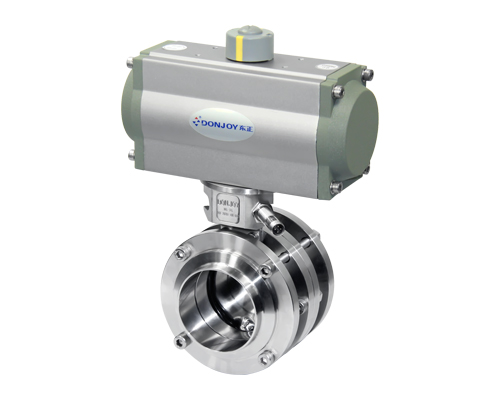
Sanitary multi-channel butterfly or ball valve modules, combined with quick-release clamp connections, enable rapid switching of different product flow paths and efficient online cleaning, reducing product changeover time by more than 50% and significantly reducing flavor residue.
•Fine Chemicals: In flexible production with multiple products and small batches, it is used for switching the feeding of different reactants to the same reactor, or for the precise addition of catalysts and additives.
The explosion-proof integrated valve assembly has extremely high chemical compatibility and can safely handle corrosive, toxic, or oxygen/moisture-sensitive materials. Its compact design reduces the footprint and leakage risk in hazardous areas. 04 Technical Implementation: In-depth Analysis of Mainstream Integrated Solutions
Integration is not a single product, but a solution system encompassing various advanced technologies. These technologies collectively form the core of modern fluid handling systems.
Successfully deploying an integrated anti-mixing solution requires a rigorous and systematic implementation path.
•The first stage begins with an in-depth analysis of process requirements. This involves collaborating with the client to create accurate P&ID diagrams, defining all media properties, flow rates, pressures, temperatures, and switching logic, and specifying cleaning and sterilization requirements.
•The second stage is design and engineering. Based on the requirements, the most suitable solution type and materials are selected. CFD flow field simulation software is used to optimize internal flow paths, eliminating vortices and low-velocity areas. Simultaneously, 3D modeling is performed to complete interference checks and spatial planning.
•The third stage is manufacturing and testing. Precision machining, welding, and polishing are completed in a cleanroom environment, followed by rigorous factory acceptance testing, including pressure testing, helium mass spectrometry leak testing, and functional cycle testing, ensuring quality before shipment.
•The final stage is on-site validation. After installation, on-site acceptance testing is performed, and support is provided to the client to complete critical performance validation.
An integrated anti-mixing solution is not simply a product replacement, but an upgrade in systems engineering philosophy. It shifts complexity from the installation site to the design phase and the supplier's workshop, delivering to the user guaranteed performance, safety, and compliance.
For pharmaceutical, biotechnology, semiconductor, and food companies facing fierce competition and strict regulations, investing in advanced integrated fluid solutions means investing in higher product quality, faster time to market, lower operational risks, and future-proof production flexibility.
This is a key technological cornerstone for the process industry's transition to efficiency, flexibility, and intelligence.


 中文
中文 English
 Pусский
 Español